
What is Zonal Value and Why It Matters?
Jerwin Munoz | December 6, 2025
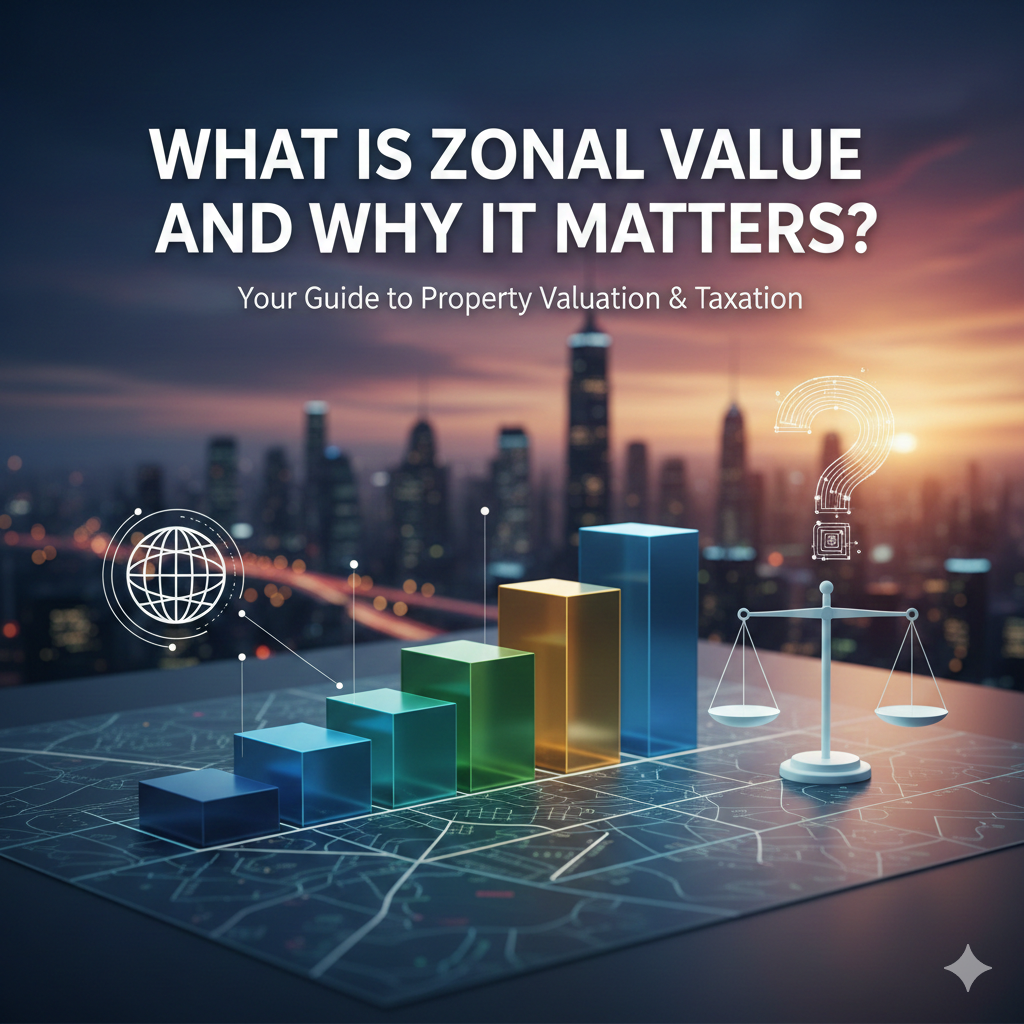
Understanding Zonal Value: A Must-Know for Every Filipino Property Buyer
Buying or selling property in the Philippines can feel overwhelming, especially when it comes to understanding government-mandated property valuations. One term you’ll frequently encounter—especially in tax documents, real estate transactions, and due-diligence checks—is “zonal value.”
Whether you're a buyer, seller, broker, or property investor, knowing what zonal value means can save you money, time, and problems with the BIR. This guide explains everything you need to know in a way that’s clear, practical, and beginner-friendly.
What is Zonal Value?
Zonal Value refers to the Bureau of Internal Revenue (BIR)–prescribed value of a piece of real estate, used primarily for tax computation.
It is the minimum value that the BIR will recognize when assessing taxes for:
- Capital Gains Tax (CGT)
- Creditable Withholding Tax (CWT)
- Documentary Stamp Tax (DST)
- Estate and Donor’s Tax
If you're buying or selling a property, the BIR will compute taxes based on whichever is higher between:
- The selling price,
- The fair market value (FMV) from the LGU/tax declaration, or
- The zonal value.
This is why knowing the zonal value is important—it directly impacts how much tax you pay.
Why Does the BIR Set Zonal Values?
The zonal value system was created to ensure:
1. Fair and consistent taxation
Different areas appreciate at different rates. Zonal values help standardize tax computations and prevent undervaluation.
2. Updated real estate pricing references
Markets change. Zonal values help the BIR keep track of property value increases in busy cities like Manila, Makati, Cebu, and Davao.
3. Transparency in property transactions
By providing publicly accessible values, buyers and sellers can estimate tax responsibilities ahead of time.
How Is Zonal Value Determined?
The BIR sets zonal values after considering:
- Location (barangay, street, subdivision)
- Type of property (residential, commercial, agricultural)
- Accessibility (near schools, malls, business districts)
- Market demand
- Appraisal studies
- Development in the surrounding area
- Each street or zone may have a different value.
Example:
- A house on a main road may have a higher zonal value than one inside a narrow inner street.
- A condo in BGC will have a different zonal value from a condo in Pasig.
Where to Check Zonal Values in the Philippines
You can find zonal values through:
1. BIR Website
They publish updated zonal value tables per revenue district.
2. Local BIR Revenue District Office (RDO)
Buyers and brokers typically request updated lists directly from the RDO covering the property.
3. Real estate brokers or appraisers
Licensed professionals usually have the latest zonal value charts and can help interpret them.
4. Property developers
For condo or subdivision buyers, developers often disclose zonal values for transparency in tax computation.
Zonal Value vs Fair Market Value: What's the Difference?
Many Filipinos confuse zonal value with fair market value (FMV).
They sound similar but are not the same.
Zonal Value
- Determined by the BIR
- Used to compute taxes
- Standardized per street/zone
- Updated periodically
Fair Market Value (FMV)
- Determined by the LGU/assessor
- Based on the tax declaration
- Used for real property tax (RPT)
- Usually lower than the market price
Market Value (Selling Price)
- The price agreed between buyer and seller
- Based on demand, location, and real estate trends
For tax purposes, the BIR uses the highest among these three.
Why Zonal Value Matters (Especially in the Philippines)
1. It affects your property taxes
The higher the zonal value, the higher the taxes.
This is especially important for:
- Capital Gains Tax (6% of selling price or zonal value, whichever is higher)
- Documentary Stamp Tax (1.5%)
- Donor’s Tax (6%)
- Estate Tax (6%)
Example:
If your selling price is ₱2,000,000 but the zonal value is ₱2,500,000, taxes will be based on ₱2,500,000.
2. It helps buyers avoid overpricing
Some sellers put a very high asking price.
By checking the zonal value, buyers can see if the property is priced fairly relative to the area.
3. It helps sellers estimate net profit
Sellers need to know:
- How much tax they’ll pay
- If their asking price still makes sense after taxes
- If there’s room for negotiation
Zonal value makes financial planning easier.
4. It gives investors a reliable benchmark
Real estate investors use zonal values to:
- Spot undervalued locations
- Compare different cities
- Predict future growth
- Calculate ROI and cash flow
5. It’s essential for estate planning
Heirs must pay estate tax before transferring the title to their names.
Zonal values are used to compute those taxes.
Why Zonal Value Changes Over Time
Zonal values are updated to reflect:
- Urban development
- Construction of new highways
- Economic activity
- Property demand trends
- Inflation
Cities like Manila, Makati, Quezon City, and Cebu have experienced repeated updates because of fast development.
Meanwhile, smaller towns may have older zonal value tables.
Important: Always check for the latest zonal value before closing a deal.
Common Misconceptions About Zonal Value
❌ "Zonal value is the selling price."
No. Many properties sell way above the zonal value—especially condos and properties in prime areas.
❌ "It is the same across the whole city."
Each street, barangay, and property type may have different zonal values.
❌ "Zonal value is always higher than FMV."
Not necessarily. FMV can sometimes be higher, especially in provincial areas.
❌ "Filipinos don't need to know this."
Anyone transacting real estate—buyer, seller, investor, heir—needs to know zonal value to avoid wrong tax payments.
How Zonal Value Impacts Different Types of Property Buyers
For First-Time Homebuyers
You can estimate your tax obligations early on and avoid cash surprises when transferring the title.
For Real Estate Investors
Zonal value helps you:
- Identify areas with low taxation
- Spot undervalued markets
- Estimate your margins
For OFWs
Many OFWs buy property for family or retirement; knowing zonal values helps budget more accurately.
For Sellers
You can calculate your net take-home after taxes before setting your price.
How to Get the Latest Zonal Value (Step-by-Step)
1. Identify the property’s exact location
Barangay, street, subdivision name, and RDO.
2. Visit the BIR website
Go to “Zonal Values” under Revenue Issuances.
3. Select the correct Revenue District Office (RDO)
4. Look for the property classification
(Residential, commercial, industrial, agricultural)
5. Check the price per square meter
Multiply by the property’s lot area.
Example:
Zonal value = ₱12,000 per sqm
Lot area = 100 sqm
Total zonal value = ₱1,200,000
How to Compute Taxes Using Zonal Value
Let’s say you are selling a house.
Selling price: ₱3,200,000
Fair market value (FMV): ₱2,800,000
Zonal value: ₱3,500,000
Base for tax computation = ₱3,500,000 (highest value)
Capital Gains Tax (6%)
₱3,500,000 × 6% = ₱210,000
Documentary Stamp Tax (1.5%)
₱3,500,000 × 1.5% = ₱52,500
Total taxes = ₱262,500
Tips to Use Zonal Value to Your Advantage
✔ Compare zonal value vs. selling price
If selling price is too high compared to zonal value, negotiate.
✔ Ask for updated zonal value tables
Some tables posted online may be outdated.
✔ Consult a licensed broker
They can interpret zonal value in relation to market conditions.
✔ Factor taxes into your budget early
Don't wait until the last step—taxes can reach hundreds of thousands.
Sometimes areas with low zonal value today become hotspots later.
Conclusion: Why Zonal Value Truly Matters
Zonal value is more than just a number—it directly affects your:
- Taxes
- Buying power
- Profit margins
- Investment decisions
- Estate planning
- Property transfers
Understanding it helps you make smarter real estate decisions and avoid unnecessary expenses. Whether you're buying your first home, selling a lot, or planning for the future, knowing the zonal value gives you an advantage.
Recent Posts





Promos/Discounts









LOOKING FOR A PROPERTY?